Uplifting the success of Dreamers — Talent Knows No Status.
Table of Contents
The founding and mission of TheDream.US
When Dreamers Rise, Our Cities Rise
A proven American story backed by history and data
Neighbors, classmates, and community members
Patrycia, Juan, and Mayra — three journeys of belonging
Economic facts, a call to action, and how you can help
Introduction
TheDream.US was founded in 2013 by Don Graham, Henry Muñoz, and Carlos Gutiérrez — a bipartisan group united by a commitment to expanding higher education access for undocumented young people. Motivated by the reality that Dreamers were excluded from college due to ineligibility for federal financial aid, they launched a national scholarship fund to remove this barrier.
Over the past decade, TheDream.US has grown into the nation's largest and leading organization supporting Dreamers at the intersection of higher education, workforce development, immigration, and advocacy. We have awarded more than 12,000 scholarships to immigrant youth from over 120 countries and 45 states, with more than 4,500 graduates to date. Today, we partner with nearly 80 colleges across 19 states, Washington D.C., and online.
Now led by President and CEO Gaby Pacheco, TheDream.US continues to center Dreamer voices and data-driven solutions to expand equitable access to college and career success.
Executive Summary
Chicago's story is one of people arriving with little, contributing much, and building a shared future — from European immigrants who built its industries to today's newcomers from Latin America, Africa, Asia, and Eastern Europe. Chicago's greatness has always been built by those who came seeking opportunity.
TheDream.US was created out of a simple but powerful belief: Talent Knows No Status. Over 12 years, we have supported more than 12,000 students in accessing higher education. Today, more than 4,500 Scholars are college graduates — teachers, nurses, attorneys, social workers, and professionals serving Chicago and Illinois. What we have learned is consistent: When young people are given opportunity, they succeed.
When immigrants are integrated — given the ability to study, work legally, and live without fear — they become contributors, taxpayers, caregivers, and leaders.
Dreamers don't withdraw from society — they invest in it. They strengthen the very communities they grew up in.
Through the stories of a lawyer, an accountant, and a social worker, this report shows how integration strengthens not only individual lives, but entire cities.
The Case for Integration
American history offers repeated proof that integration creates prosperity, stability, and national strength. When policymakers have chosen inclusion over exclusion, the results have been measurable and lasting.
By granting lawful permanent residence to Cubans fleeing communism, the U.S. enabled rapid workforce participation and entrepreneurship. South Florida's economic dynamism today is inseparable from that decision. Legal status provided stability — and stability produced growth.
The Immigration Reform and Control Act legalized nearly three million undocumented immigrants. Research since shows legalization increased wages, homeownership rates, tax compliance, and upward mobility for beneficiaries and their children.
Enacted with bipartisan support, NACARA provided relief and permanent status to Central Americans fleeing instability. Lawful status allowed families to invest in education and businesses and fully participate in civic life.
Though temporary and limited, DACA granted work authorization to young people already part of our communities — resulting in higher educational attainment, increased earnings, greater homeownership, and billions in annual tax contributions.
"This scholarship relieved a huge financial burden when I was in school. Generously, the scholarship also aided me in funding my application to naturalization. Now I can travel, have new experiences, and have a secure work permit to help my community in the nursing field."— A Dominican University graduate working as a Registered Nurse
The Case for Integration
Across decades and administrations — Democratic and Republican alike — the pattern is consistent. The Cato Institute has found that immigrants are net contributors to the U.S. economy, display high rates of entrepreneurship, and strengthen public finances. Integration, when structured through lawful channels, aligns with both economic growth and limited-government principles.
Enables Rapid Integration
Neighborhoods Strengthen
National Strength Compounds
Who Are the Dreamers
Dreamers are not strangers. They are neighbors, classmates, and the children who grew up in our schools, played in our parks, worshipped in our churches, and learned our shared civic values. They are as American in culture, identity, and commitment as any other young person raised in this country.
Established in 2012, DACA was transformative: more than 9 out of 10 TheDream.US DACA recipients are employed — in nursing, teaching, and more. DACA recipients contributed billions to our economy.
Most Dreamers today lack DACA — including three in four Dreamers in college today who have no protections and have been barred from accessing DACA.
75,000 Dreamers graduate high school each year, but are encountering fewer opportunities and protections while navigating new restrictions on accessing and affording higher education.
The question is not whether Dreamers belong — the evidence shows they already do. The real question is whether our policies will reflect what history has already proven: when America chooses integration, America wins.
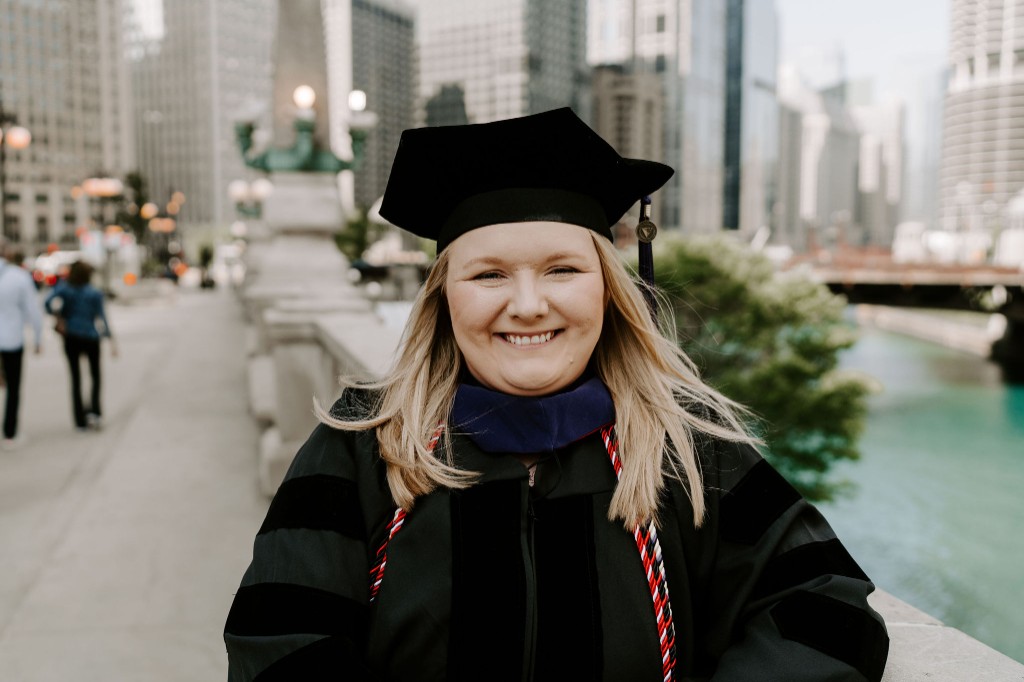
Scholar Story — Patrycia Piaskowski
Patrycia Piaskowski arrived in the United States from Poland in 2002 at the age of seven. Her childhood was shaped by movement, instability, and uncertainty as her family lived in Brooklyn, Pennsylvania, and eventually Chicago. Growing up undocumented, she struggled with belonging, identity, and the quiet fear that defines so many immigrant childhoods.
In 2012, she became one of the first recipients of DACA. For the first time, she had work authorization, an ID, and the ability to begin building a future that matched her ambition.
When Patrycia graduated high school, she was accepted to DePaul University but faced over $20,000 per semester in tuition with no access to federal aid. She chose dignity over debt and enrolled at Wilbur Wright College, earning her associate's degree. A career advisor introduced her to TheDream.US — and everything changed.
With scholarship support, she transferred to Dominican University, pursuing Political Science, Legal Thought, and Pre-Law. She entered IIT Chicago-Kent College of Law and graduated in 2023. She passed the Illinois Bar, was sworn in as an attorney, and now practices law in Chicago. Today, she is a U.S. citizen.
Scholar Story — Patrycia Piaskowski
The legal system gained a professional shaped by empathy, resilience, and lived experience.
A civic contributor, a taxpayer, and a professional who helps uphold the rule of law.
A little girl who once questioned whether she belonged now helps others navigate the legal system. This is what integration looks like.
Scholar Story — Juan R.
Scholarship awarded
Accounting, 2020
Completed 2021
Accountant & Recruiter
Scholar Story — Juan R.
Juan R. arrived in the United States in June 2001 with his family on a tourist visa. Chicago quickly became home. He learned English, attended school, made friends, and grew up believing that hard work and patience would secure his family's future.
A turning point came when Juan received a TheDream.US scholarship while transferring to the University of Illinois Chicago. The scholarship lifted a tremendous financial burden — and meant something equally powerful emotionally: validation that his dreams were worth investing in.
Shortly after purchasing his first home, Juan became a U.S. citizen — a milestone that allowed him to petition for his parents, who are now permanent residents. Today, Juan works as both an accountant and recruiter at PricewaterhouseCoopers.
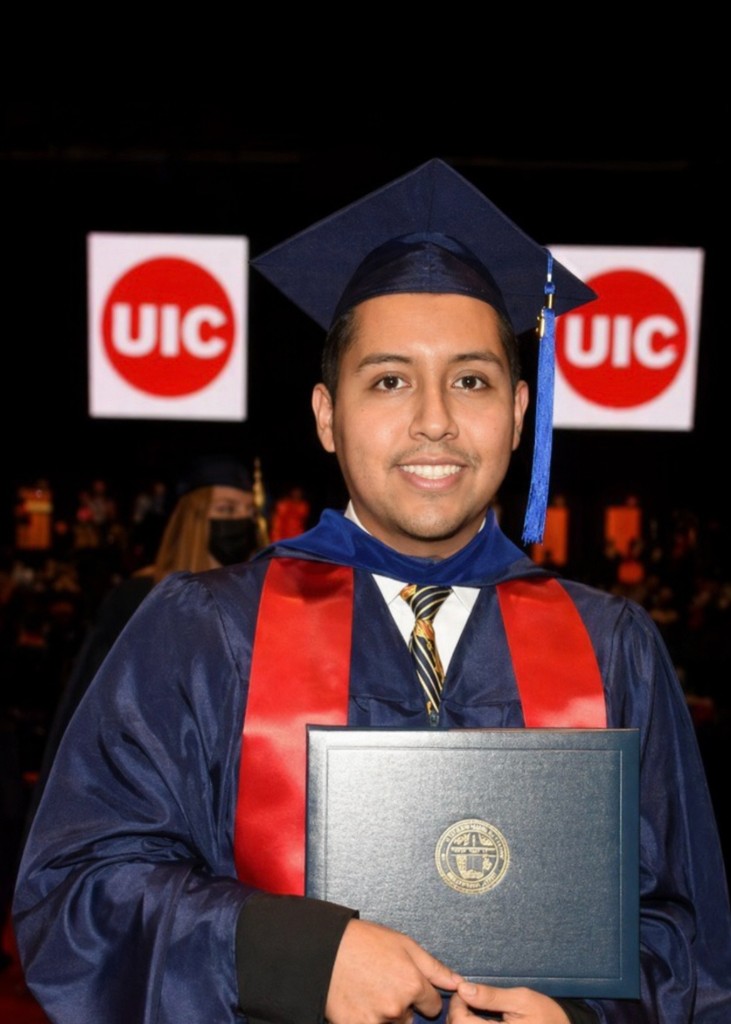
"Integration is not a policy term — it is the lived experience of belonging without having to erase who you are. It means pursuing an education, building a career, and contributing to your community while honoring your language, culture, and family roots."
— Juan R., Accountant & Recruiter, PricewaterhouseCoopersJuan purchased his first home — a milestone of stability and investment in his community.
Citizenship allowed Juan to petition for his parents, who are now permanent residents of the United States.
At PwC, Juan brings lived experience as an immigrant to shape more inclusive hiring and career pathways.
Scholar Story — Mayra Arriaga
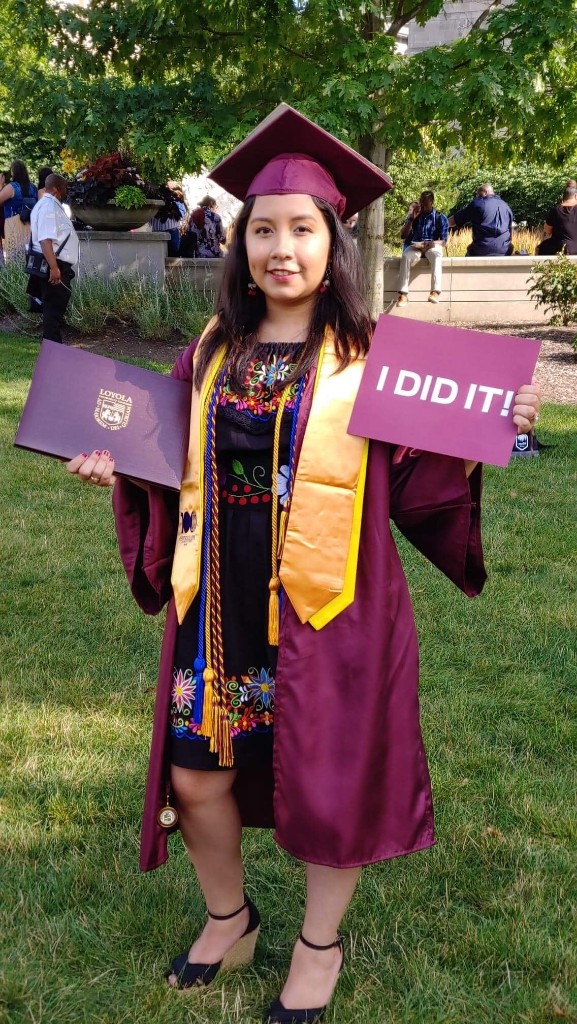
Mayra Arriaga arrived in the United States from Mexico in 1999 when she was just nine months old. Chicago was home. That awareness of her immigration status came later — watching her older brother navigate barriers to his opportunities to study, travel, and work.
Hope arrived in 2012 when DACA was announced. The turning point came when Mayra applied for TheDream.US scholarship. When she received the acceptance email, everything changed.
Scholar Story — Mayra Arriaga
Today, Mayra is pursuing a master's degree in social work at Dominican University while supporting survivors of gender-based violence and human trafficking. It builds on six years of work supporting survivors of domestic violence — providing counseling, safety planning, court advocacy, and connections to financial assistance.
Her work is deeply personal. When she was younger, her own family received counseling from HOPE Family Services when they lacked health insurance. The counselor who supported her family inspired Mayra to one day help others in the same way. Now she does exactly that.
Without access to education and work authorization, cities like Chicago would lose resilient leaders like Mayra — people who bring cultural understanding, language skills, and deep community connections to the work of strengthening neighborhoods.
Impact at a Glance
Supported over 12 years
In Chicago and the greater region
Active college students in Illinois in AY 2025–2026
College graduates in Illinois
Estimated annual earnings by Illinois Alumni
Estimated annual local and federal taxes paid by Illinois Alumni
The majority of our graduates earn more than their parents combined within a year of graduating. 92% of Alumni with work permits are employed or have started a business.
Impact at a Glance
Alumni by Industry
Of the 371 TheDream.US Alumni in Illinois, 78% have work authorization and 92% are employed or self-employed — serving in every sector of the economy.
National Scholarship Snapshot
Gender
Majors (AY 2025–2026)
National Scholarship Snapshot | AY 2025–2026
All Scholars eligible to receive funds
Including 64 new Scholars
Awarded to Illinois Scholars
In scholarship funds for Illinois
As of Fall 2025
To attend college
Fall 2025
Economic Data & Facts
These sources frame immigration in terms of productivity, labor markets, economic growth, and national strength — across the political spectrum.
"Legal immigrants help grow the economy and support more higher-paying jobs." President Trump: "We need competent people. We need smart people coming into our country. We're going to have jobs like we've never had before."
"Immigrants work at higher rates and are nearly twice as likely to start businesses. Immigrants have reduced federal, state, and local government budget deficits by a combined $14.5 trillion over the last 30 years."
The native-born U.S. population will begin shrinking as early as 2031. AEI warns: "Revisiting our absurdly counterproductive immigration policies might also be helpful."
"A smaller working-age population relative to retirees may strain Social Security and Medicare and reduce the tax base, raising concerns about fiscal sustainability."
Integration is not charity —
it is economic infrastructure.
Across decades and administrations — Democratic and Republican alike — the pattern is consistent: integration is not a risk. It is an investment.
The Broader Truth
Dreamers are already embedded in the social fabric of Chicago — raising families, caring for patients, educating children, paying taxes, and building futures. Exclusion creates fear. Integration creates stability. Opportunity creates contribution.
Conclusion
Chicago has always been a city defined not by where people come from — but by what they contribute. Today, Dreamers are already contributing. They are graduating from our colleges, working in our hospitals and schools, starting businesses, paying taxes, and strengthening the very communities they grew up in.
The question is no longer whether Dreamers belong. The question is whether our policies, institutions, and investments will rise to meet their potential.
A Call to Action
Expand access to institutional aid, strengthen campus-based support systems, and ensure Dreamer students are not forced to navigate college alone.
Advance policies that expand access to higher education, protect in-state tuition, and create pathways to work authorization and stability.
Recognize Dreamers as a critical part of the workforce and invest in inclusive hiring, career pathways, and internships.
Invest directly in the talent that is already here. Organizations like TheDream.US have proven what is possible — but thousands of talented students still lack access.
Graduate Voices
"Dreamers prove themselves over and over again as a community of the most hard working, diligent and determined individuals with the intent of improving their immediate communities and serving the country they now call home."
— A National Louis University graduate working as a Special Education Teacher"When I was a sophomore in high school I would look at job postings for Software Engineer positions, filled with anxiety wondering whether I could ever achieve that as an undocumented immigrant. Fast forward 8 years — I'm a Software Engineer. You guys made that happen."
— A University of Illinois at Chicago graduate working as a Software Engineer"I helped this country get through the pandemic, and none of it would have been possible without TheDream.US. Everything that I am accomplishing is because of them."
— A Dominican University graduate working in Healthcare"TheDream.US has changed my life for the better. With the scholarship, I was able to graduate on time and without taking out student loans. Now, I am financially stable and saving up money to further other goals such as buying a house or pursuing grad school. None of this could have been possible without TheDream.US."
— Northeastern Illinois University, B.S. MarketingHow You Can Help
Fund scholarships at thedream.us/give
Work with institutions that support immigrant students and build inclusive systems.
Champion inclusive policies at the local, state, and federal level.
Amplify these stories to shift public understanding and build momentum.
When Dreamers rise, Chicago rises. When Chicago rises, the nation follows.
Give Now at thedream.us/giveAcknowledgements & Contact
TheDream.US is grateful for the support of all donors, including the Walder Foundation and Schreiber Philanthropy, in publishing this report.
Sylvia Wong
Chief Development Officer
Sylvia.Wong@thedream.us
347.426.8250